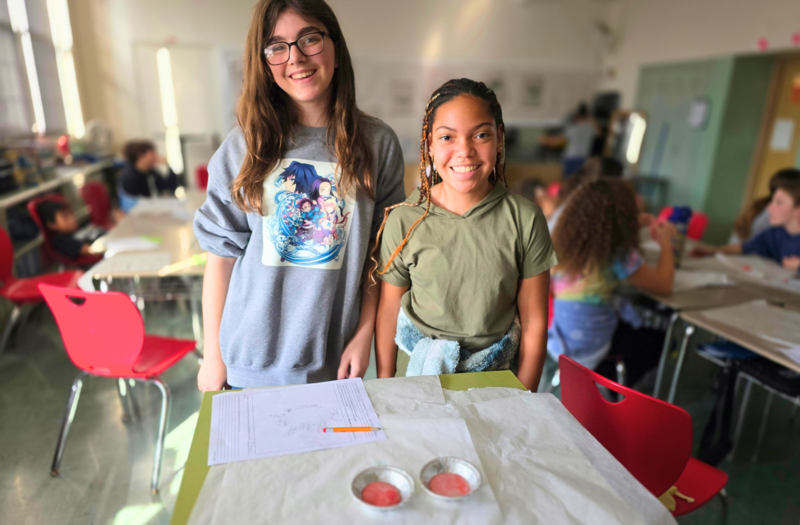
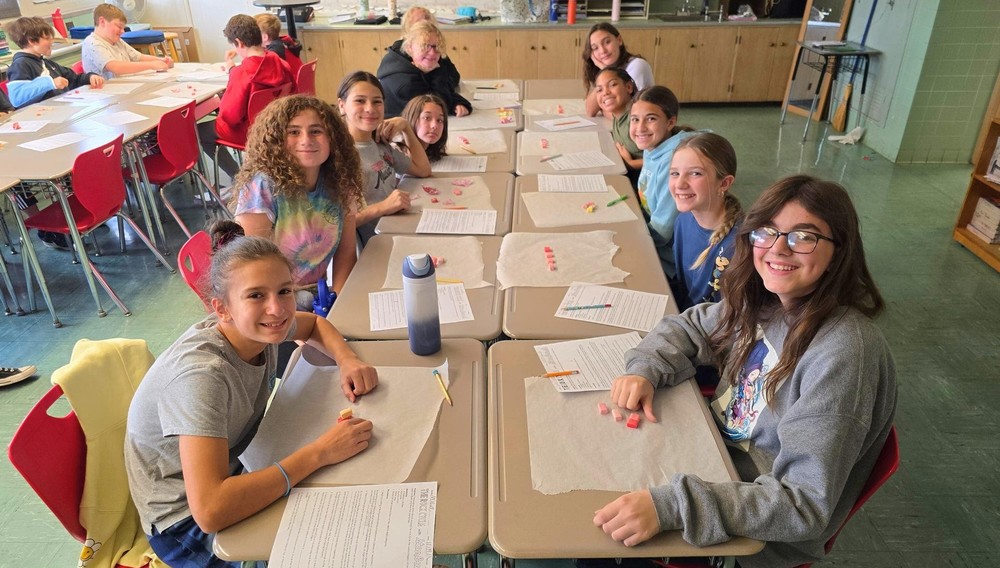
The next time sixth graders in Annamarie Loncar and Lindsay Russell’s science classes enjoy a Starburst and Mamba candy, they’re likely to remember the three major rock types. In a recent laboratory investigation, the students used the candies as rock simulators as they learned how sedimentary, metamorphic, and igneous rocks are formed.
To bring the geological process to life, the students first broke the candies into small pieces. Using their textbooks, they applied pressure to simulate compaction and cementation to create sedimentary rock. They continued by applying heat and pressure to see how the rocks transformed under changing conditions in a process called metamorphism.
Finally, they used an egg poacher to apply heat and steam and watched as the candy samples melted and then cooled to form new igneous rocks. The students observed and documented the changes throughout each stage.
“The final step with the egg poacher was particularly impactful, as students could directly observe the melting and cooling processes that create igneous rocks in nature,” noted Russell.
The laboratory experience left students with a deeper understanding of how rocks continuously cycle through the earth's systems, transforming from one type to another, through the processes of weathering, heat, pressure, and cooling.
“Our sixth graders demonstrated excellent scientific observation skills and enthusiasm for learning about Earth's dynamic processes through this creative and effective laboratory experience,” noted Russell. “The visual and tactile elements of this lab ensures that these concepts will remain memorable and meaningful as students continue their earth science studies.”